How long does it take to build a custom catamaran?
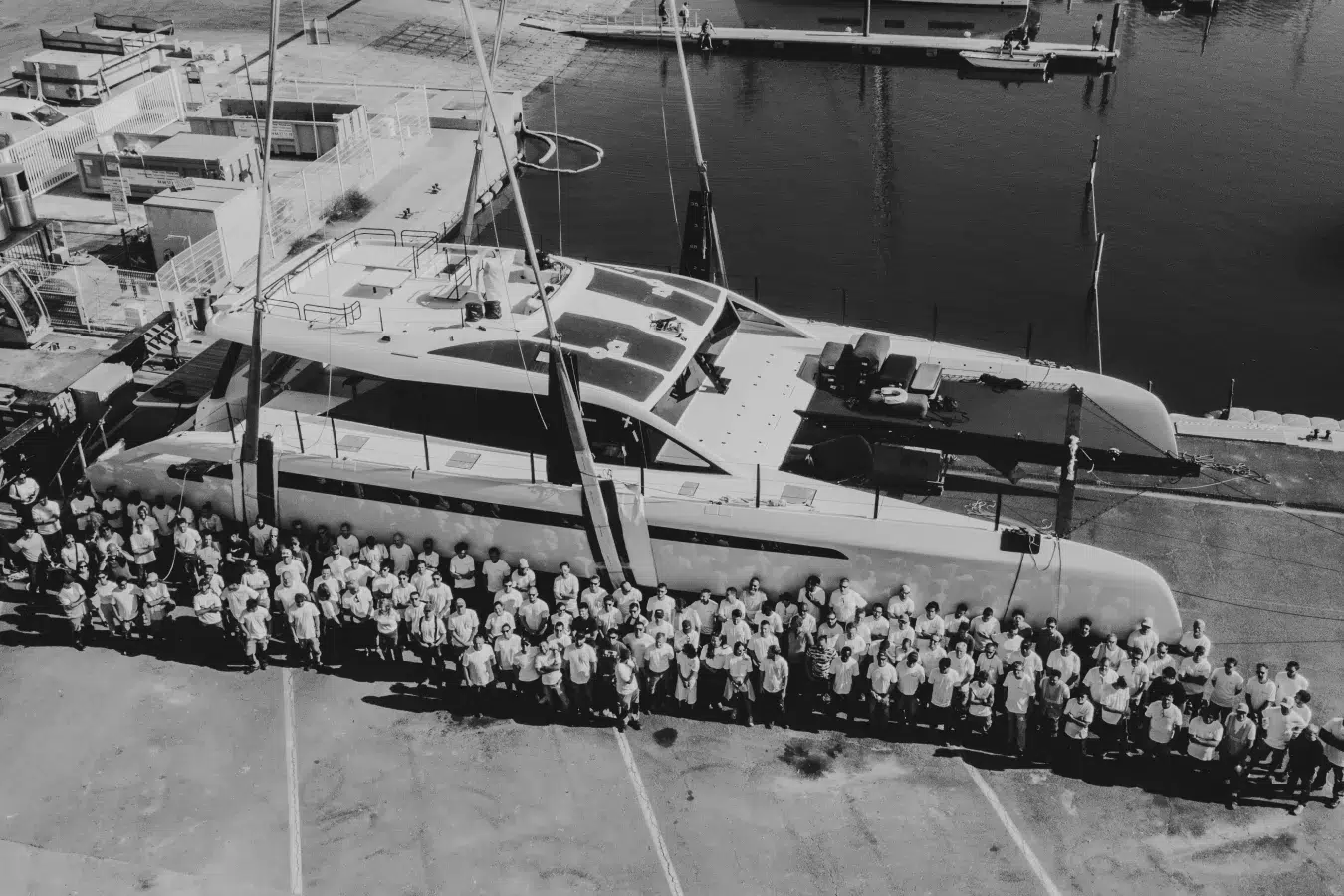
Ask ten people “how long does it take to build a custom catamaran?” and you will hear ten different numbers. Some quote a year, others three. Most of them are right, because they are not measuring the same thing.
The question hides two durations. The first is the build itself: the months a boat spends in the shed, from the first layer of carbon to the day she rolls out to the water. The second is the full journey, from the moment an owner decides to build to the moment they take the helm. That second figure includes design work, specification choices and the wait for a production slot. Mixing the two is why catamaran build time figures rarely line up. This guide separates them, then walks through each stage of a semi-custom build as it happens on the shop floor.
Short answer: How long does it take to build a custom catamaran? At Gunboat, the build itself takes 18 months for a Gunboat 68, 20 to 21 months for a Gunboat 72, and 24 months for the Gunboat 80 and the Fusion 80. Add the design and specification phase before that, plus the wait for a build slot. These figures describe a typical build, not a contractual commitment.
Two timelines, not one
The build timeline starts when the first carbon goes into the mould and ends at handover. It is driven by the size of the boat, the construction method, the complexity of the interior and systems, and the number of hours the shipyard can put on one hull at a time. For a given series, this is the most predictable part of the project, because the moulds exist, the structure is engineered and the team has built the boat before.
The lead time is everything between the first conversation and the start of that build. It covers the design phase, where the owner works with the shipyard on layout, finishes and equipment. It covers the specification, the document that freezes those choices. And it covers the build slot: a shipyard that builds a handful of large carbon catamarans at once can only start a new hull when space and crews free up.
An owner who signs when a slot is open and already knows what they want will see the two timelines almost merge. An owner who joins a waiting list, then takes time to refine the layout, may spend as long before the first carbon as during the build itself.
Neither path is wrong. But when you compare figures, check which one you are looking at. A shipyard quoting a build time and a broker quoting a delivery date are often answering different questions.
The build, stage by stage
A semi-custom carbon catamaran is not built on a line. Several stages overlap: the interior team can start on furniture while the structure is still being finished. But the order below is the backbone of every build.
Design and specification
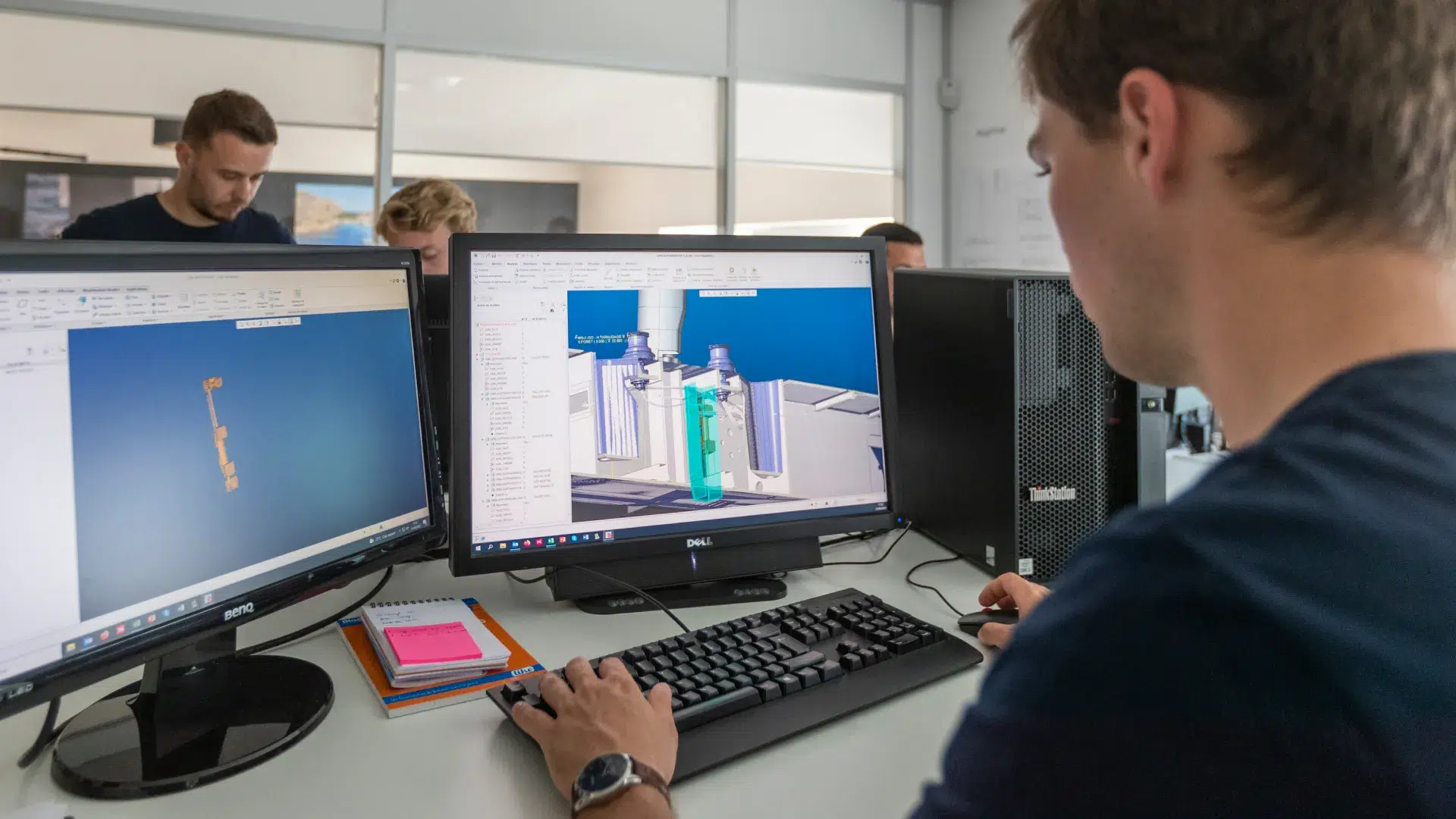
The naval architecture and structure of the series already exist. What the owner shapes is the boat inside that envelope: cabin layout, galley position, finishes, electronics, sail plan options, systems. The output is a specification that the whole build will follow. The more decisions are settled here, the smoother everything after it.
Tooling and moulds
For an existing series, the moulds are ready and this stage takes little time. For a new series, tooling is a project of its own: on the first Gunboat 68, it started seven months before the first carbon was laid. Custom elements such as a modified deckhouse or specific appendages can require new tooling, which adds time.
Hull lamination and infusion
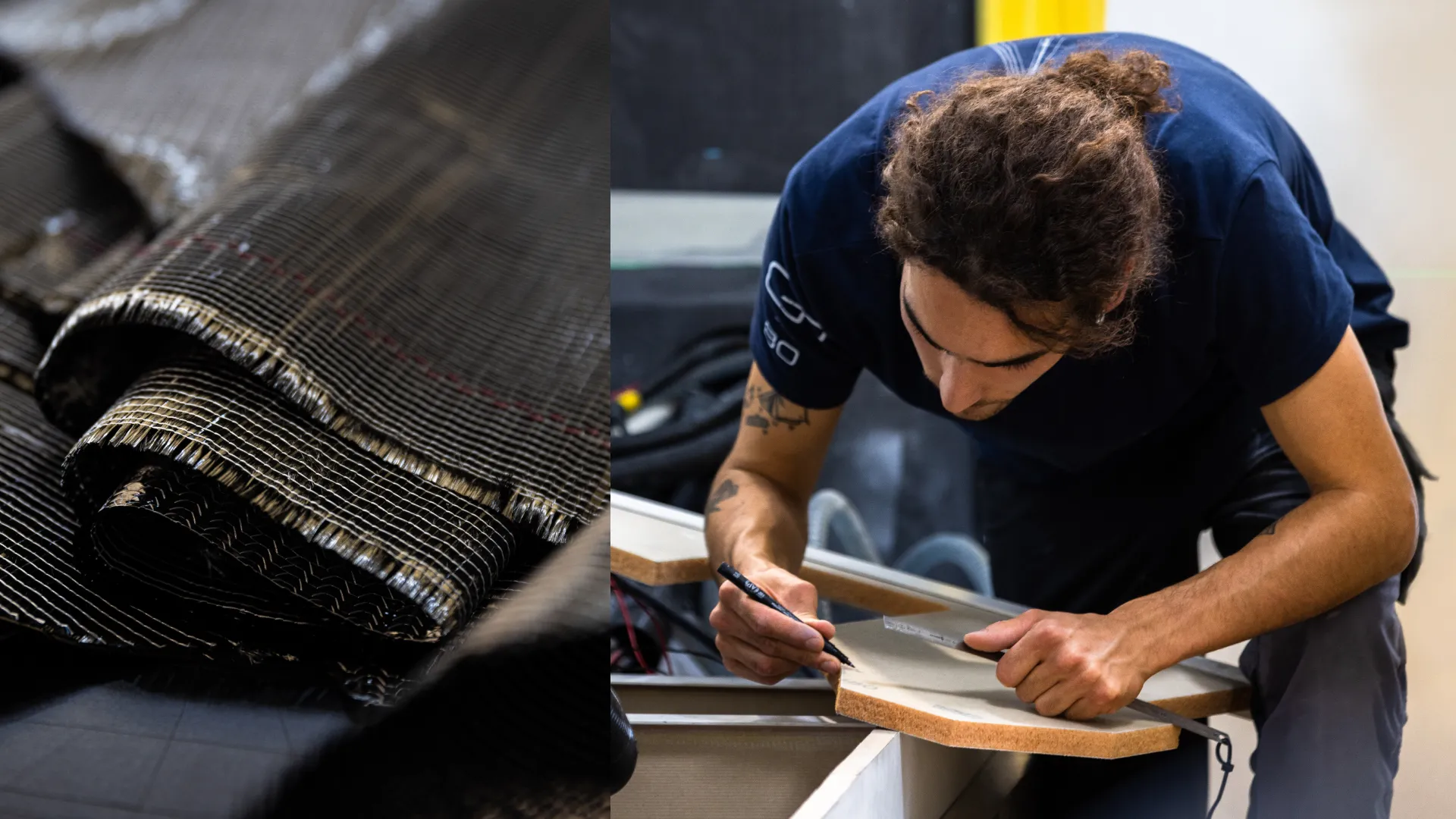
Dry carbon fabrics are cut, laid into female moulds layer by layer with the core material, then the resin is drawn through under vacuum. Depending on the series, hulls are built by carbon infusion or in prepreg. On Gunboat 6801, the hull and bridgedeck came out of the mould about three months after the first carbon went in.
Deck and structure
The deck is laminated separately, while bulkheads and structural reinforcements are bonded into the hulls. These parts carry the rig and the sea loads, so every bond is checked before the next step.
Assembly and joining
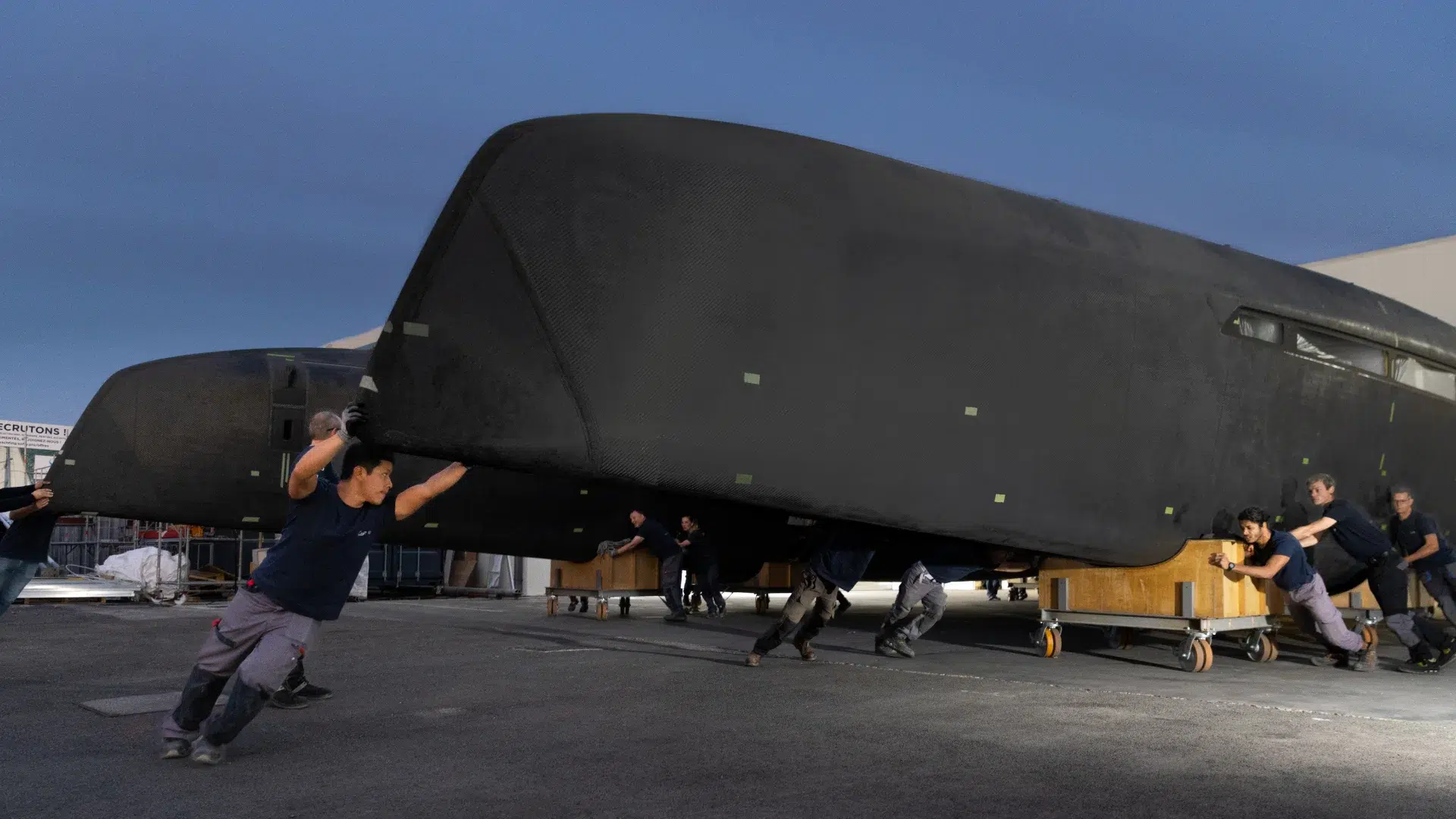
Deck and hulls are joined into one structure. It is the moment the boat starts to look like a boat, and a milestone owners often come to see.
Systems installation
Electrical, plumbing, hydraulics, electronics and engines go in, usually before the interior closes up access to the hulls. On a carbon catamaran, every cable run and through-hull is planned to protect the structure and the weight budget.
Interior fit-out
Furniture is built in lightweight composite or cored panels, then fitted and adjusted piece by piece. This is where owner choices weigh most on the calendar, because each layout change touches joinery, systems and finishes at once.
Rig, sails and commissioning
After paint, the boat rolls out of the shed for launch and mast stepping. Rigging, sails, deck hardware and electronics are tuned, and every system is tested afloat.
Sea trials and handover
The boat sails in real conditions, with the shipyard team on board, to check and adjust everything before delivery. Gunboat plans around two months of testing between launch and handover. The owner then takes the boat with a trained crew and a full set of documentation.
What makes one build longer than another
Two boats from the same series, started a few months apart, can finish weeks or even months apart. The structure is the same. What differs is almost always a choice.
The degree of customization. A semi-custom build sits on a proven platform. The closer the owner stays to it, the shorter the build. Each departure, from a reworked cabin plan to a modified deck layout, means engineering, sometimes new tooling, and extra hours on the shop floor.
Interior choices. Joinery is the most labor-intensive part of the fit-out. Rare veneers, complex shapes and bespoke furniture take longer to build and to fit. A modified layout also moves bulkheads, systems runs and access panels, which cascades through the build.
Technical options. Additional systems such as watermakers, larger battery banks, specific electronics or sail handling upgrades each need to be integrated, routed and tested. One option rarely changes the calendar. Several of them, added together, do.
Late decisions. This is the factor owners control most, and the one with the biggest impact. A choice made during the specification phase is a line in a document. The same choice made after lamination starts can mean reworking parts already built, reordering equipment and resequencing the team.
Supply. Some components come with their own lead times: rigs, sails, engines, electronics, specific hardware. The shipyard orders them early, but a late change of supplier or model can restart that clock.
The honest takeaway is that build time is largely a consequence of the owner's decisions. That is good news. It means the owner has real control over when the boat reaches the water, and the most effective lever is simple: decide early, then hold the course.
What the owner does during the build
Building a semi-custom catamaran is not a matter of signing and waiting. The owner is part of the project from the first sketch to the last sea trial.
Decisions, in the right order. The shipyard sets a decision calendar at the start. Structural and layout choices come first, because they shape everything built afterwards. Systems and equipment follow. Finishes, fabrics and soft furnishings close the list, since they are installed last. Knowing what must be decided, and by when, is what keeps the build on its timeline.
Shipyard visits. Owners are welcome in La Grande-Motte throughout the build. The visits that matter most are the ones where decisions are still open: seeing the hulls out of the mould, walking through the structure before the interior closes, checking a mock-up or a finish sample in real light. Many owners also come back simply to watch their boat take shape.
Build updates. Between visits, the project team sends regular updates with photos and progress notes. Owners know where their boat stands without having to ask.
One relationship, one team. The owner works with a dedicated contact who coordinates design, production and suppliers. Questions get answered by the people who are actually building the boat. That continuity matters most at the end, when the same team that built the boat takes the owner through commissioning, sea trials and handover.
Semi-custom versus production build
Production builders often quote build times that look much shorter. Those figures are accurate, but they describe a different kind of boat and a different kind of shipyard.
A production catamaran is built on a line. The tooling has been amortized over dozens or hundreds of hulls. Each workstation repeats the same task on boat after boat, and the interior comes in a small number of predefined versions. The time per hull is short because almost nothing is decided per hull.
A semi-custom build works the other way. The platform is proven, but each boat is specified for one owner. The structure is engineered carbon, laminated and checked part by part. The interior is fitted to that owner's layout and finishes. The same team follows the boat from the mould to the sea trials, instead of passing it along a line.
None of this makes one approach better than the other in general. They answer different needs. But the numbers cannot be transposed: comparing the build time of a production catamaran with that of a semi-custom carbon yacht is like comparing a delivery date with a construction schedule.
The right comparison is between the build time and what the owner gets at the end of it: a boat specified, built and tested for one person, with a structure and a weight budget that a production line is not designed to deliver.
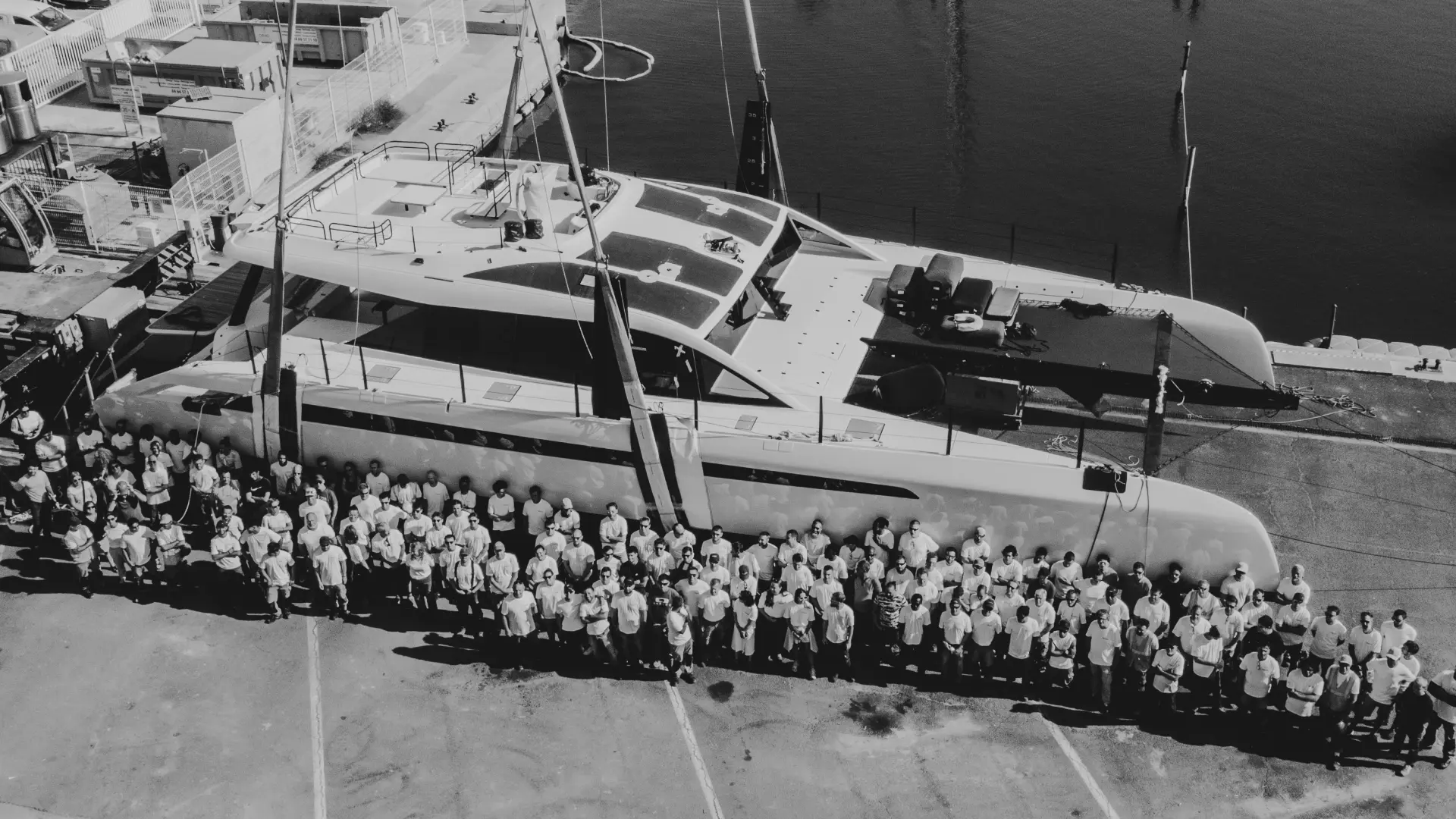
Building a Gunboat in La Grande-Motte
Every Gunboat is built in La Grande-Motte, on the Mediterranean coast of southern France. The shipyard brings design, engineering, carbon construction, assembly and fit-out under one roof, in a purpose-built factory.
The team builds a small number of large carbon catamarans at a time, with the series architecture developed with VPLP. That scale is deliberate. It allows each hull to be followed by people who know the boat, and each owner to be involved at every stage that matters.
The build news published on this site gives an honest view of what that looks like: hulls coming out of the mould, decks being bonded, boats rolling out of the shed for launch and mast stepping.
If you are considering a new build, the best starting point is a conversation with the team and a visit to the shipyard. You will see boats at different stages, meet the people who build them, and get a clear picture of how your own project would unfold.