Multihull sailboats: life on more than one hull
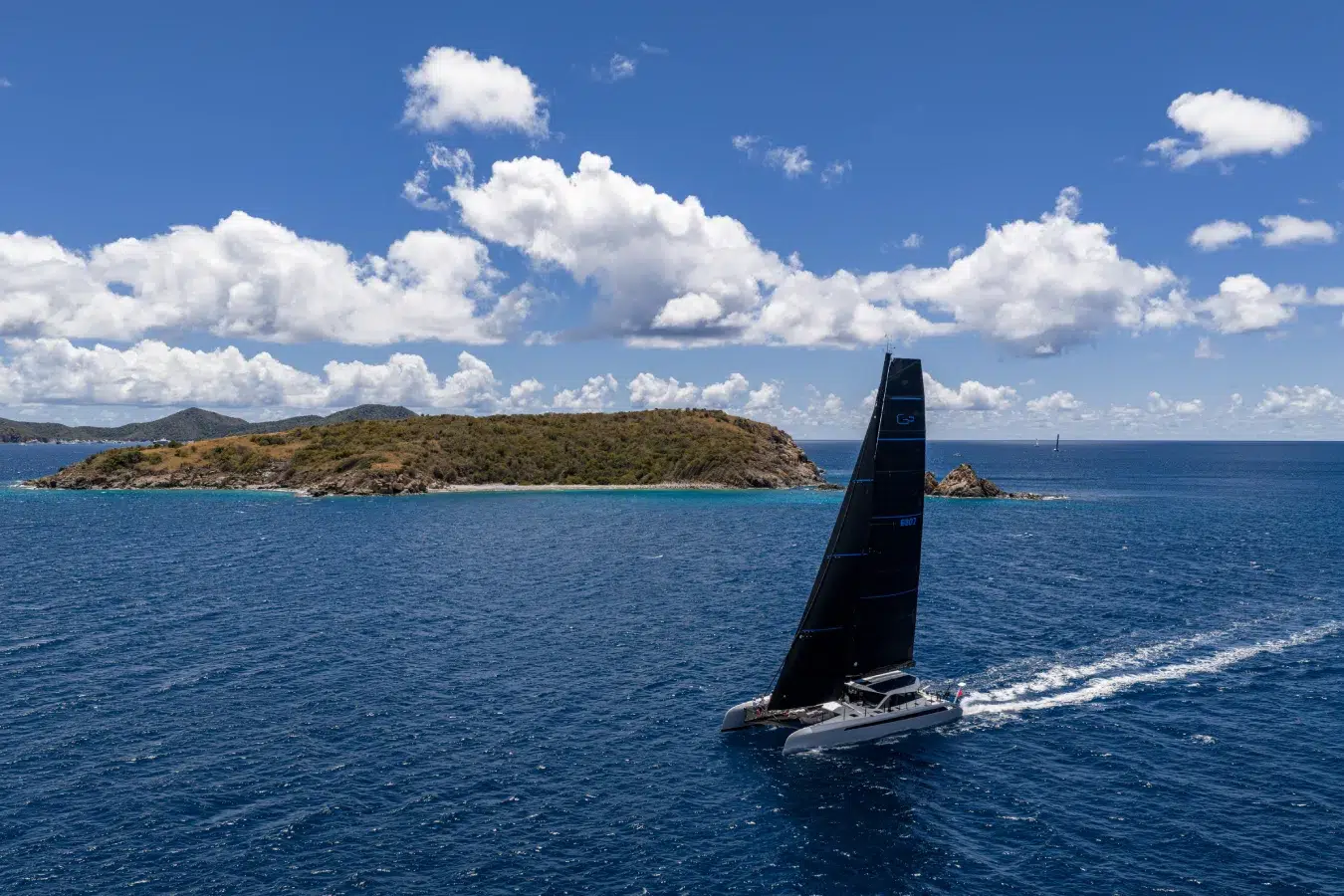
Multihull sailboats have moved from a niche curiosity to one of the fastest-growing categories in modern sailing. Whether you're weighing a first catamaran against a traditional monohull, comparing a cruising cat to a performance trimaran, or simply trying to understand what sets these boats apart, the choice can feel crowded with marketing and thin on substance. This guide takes the honest route: what multihulls actually are, where they earn their reputation, where they cost you more, and how to work out whether one fits your sailing experience. Whether you're a curious first-timer or a serious buyer, you'll find what you need here.
What is a multihull sailboat?
Definition and key characteristics
A multihull sailboat is any sailing vessel built with more than one hull, connected by a rigid structure rather than relying on a single hull and a weighted keel. Catamarans use two hulls; trimarans add a third, smaller hull on each side for extra stability at speed. Because the hulls are narrow and don't need ballast to stay upright, multihulls sit lighter in the water, draw less water, and sail with barely any heel, a fundamentally different sailing experience from a monohull.
A brief history: from Polynesian outriggers to modern ocean racers
The concept isn't new. Polynesian and Micronesian sailors were building outrigger canoes and double-hulled voyaging vessels centuries before Europeans reached the Pacific, using the same stability principle multihulls rely on today. The modern performance multihull, refined through decades of offshore racing and cruising design, is a direct descendant of that idea: distributing buoyancy across two or more hulls has always been the smarter way to combine stability and speed.
Types of multihull sailboats
Catamarans: two hulls, maximum comfort
Catamarans use two identical, widely spaced hulls joined by a bridgedeck, where most of the living space sits. That layout gives catamarans their reputation as the multihull for comfort: a stable, roomy platform suited to cruising, family sailing, and living aboard for extended periods.
Trimarans: three hulls, maximum speed
Trimarans build around a central hull with two smaller amas (floats) on either side. The center hull is often narrower than a catamaran's, which reduces drag and lets trimarans post higher average speeds. The trade-off is less interior volume than an equivalent catamaran, which is why trimarans tend to attract performance-minded and racing sailors more than cruisers.
Proas and rare configurations
Proas, asymmetric multihulls with one main hull and a single smaller outrigger, remain a niche design, more common in traditional Pacific sailing and specialist performance projects than in production cruising boats. Worth knowing about, but unlikely to be what most buyers are shopping for.
Performance multihulls: where comfort meets speed
A newer category sits between the two extremes: performance catamarans built to sail fast without giving up the comfort and living space that make catamarans appealing in the first place. This is the segment a handful of builders have built their entire range around, refusing to choose between speed and comfort rather than trading one for the other.
Advantages of multihull sailboats
Stability and safety: sailing without the heel
Where a monohull leans into the wind and holds its footing through ballast, a multihull stays close to level thanks to its wide stance, what naval architects call form stability rather than ballast stability. On a typical 45-foot catamaran, heel rarely exceeds a few degrees, compared to 15-20 degrees of sustained heel that's normal on an equivalent monohull under sail. Less heel means less strain, less fatigue, and, for many sailors, far less seasickness.
Speed and performance underway
Multihulls don't carry the drag of a heavy ballast keel, so they accelerate faster and hold higher average speeds, particularly reaching and downwind. Cruising catamarans typically average 8-12 knots against 6-8 knots for a comparable monohull, and performance-oriented designs push meaningfully higher in the right conditions.
Living space, private cabins, and onboard comfort
The bridgedeck between a catamaran's two hulls creates a wide, open saloon that a monohull has no real equivalent for, plus separate hulls that naturally divide into private cabins. For families, groups, or anyone planning to live aboard, that separation of space, and quiet, matters as much as any performance figure.
Shallow draft: exploring where monohulls cannot
Without a deep ballast keel, multihulls draw far less water. A 45-foot catamaran typically draws 3-4 feet, compared to 6-8 feet for an equivalent monohull, opening up anchorages, shallow bays, and beaching options that deeper-draft boats have to sail past.
Our take: If seasickness has kept you away from sailing in the past, a multihull's near-level platform can make a real difference: most sailors transitioning from monohulls report a noticeably smoother ride, even in moderate swells.
Can a multihull capsize? An honest answer
Form stability vs. ballast stability: two different bets
A monohull's ballast keel means that when it heels too far, gravity pulls it back upright: the boat is designed to right itself. A multihull's stability comes from its wide stance rather than a weighted keel, so it barely heels at all under normal conditions. But the two designs make fundamentally different bets on what happens in extreme conditions.
The real question isn't frequency, it's recovery
This is the part most sources skip past. A multihull capsize is rare, but frequency isn't what matters, recovery is. A monohull that's knocked down will typically right itself. A multihull that inverts generally stays inverted. That asymmetry, not the odds of it happening, is the honest answer to the capsize question, and it's exactly why the next point matters more on a multihull than on a monohull.
What actually keeps a multihull upright: design, seamanship, reefing
Because recovery isn't a given, prevention does more of the work. Sound design (bridgedeck clearance, hull volume, righting moment engineered into the boat), disciplined reefing before conditions demand it, and seamanship that respects the weather all matter more on a multihull than on a boat that can right itself. None of this makes multihulls less safe in practice, well-designed, well-sailed multihulls have crossed oceans and raced through gales for decades, but it does mean the margin for error sits in preparation rather than recovery.
Disadvantages and real trade-offs
Higher purchase price and total cost of ownership
Multihulls cost more to build than an equivalent monohull, hull for hull, and that gap carries through to resale. But purchase price is only the start: insurance premiums run higher, and maintenance covers two hulls, two engines, and more systems than a monohull of comparable length.
Marina space, mooring challenges, and double fees
A catamaran's wide beam is the same feature that gives it stability and space, and it's also what makes marina life more expensive. Many marinas charge by beam or require a double slip, and not every marina has room for a multihull at all, worth checking before you commit to a homeport.
Handling in heavy weather
Twin engines give multihulls precise low-speed control that a monohull's single screw can't match, which helps in tight marinas. But the wider beam demands more room to maneuver, and heavy weather sailing on a multihull rewards the same discipline covered above: reefing early and respecting the conditions.
Good to know: Marina fees for a catamaran typically run 1.5x to 2x those of a comparable monohull, as most marinas charge by beam or require a double slip. Factor this into your annual ownership budget.
Multihulls in action: what performance looks like
Sailing at wind speed: what modern performance multihulls achieve
Performance figures mean more when they're published rather than promised. Gunboat's 72 Series, for instance, is built to sail at wind speed from 8 knots true, a benchmark that puts real numbers behind what "performance catamaran" is supposed to mean.
Offshore racing: multihulls at the Transpac and beyond
Offshore racing is where multihull design gets tested hardest. The Gunboat 68 Convexity at the Transpac showed what a cruising-capable performance catamaran can do against a demanding Pacific course, and racing the Caribbean Multihull Challenge put the same design philosophy through a very different, tactical regatta environment.
Bluewater cruising: from the Caribbean to Greenland
Performance and long-range cruising aren't mutually exclusive, either. bluewater cruising to Greenland documented a Gunboat 68 handling high-latitude conditions few production catamarans ever see. Between a Transpac campaign, a Caribbean regatta, and a Greenland cruise, the same range of boats covers racing, ocean crossing, and life aboard, proof that a multihull doesn't force a choice between them.
How to choose the right multihull sailboat for your needs
Define your sailing goals first
Everything else follows from how you actually plan to sail. Coastal weekending, a transatlantic crossing, competitive regattas, and full-time living aboard call for different balances of speed, space, and systems, and no single multihull optimizes for all four at once.
Budget for the boat and everything around it
The purchase price is the beginning of the budget, not the whole of it. Factor in the ownership costs covered earlier, marina fees, insurance, and maintenance, alongside the boat price itself, so the number you're comparing against a monohull or another multihull reflects the full picture.
Try before you commit
Reading specifications only goes so far. Boat shows, sea trials, and accompanied deliveries all let you feel how a given design actually handles before you commit to it. Builder-run sea trials in particular are worth prioritizing: they put you on the exact boat you're considering, in real conditions, with someone who knows it well on board.
New or used: two ways into multihull ownership
Buying new: specification, build and commissioning
Buying new means specifying the boat to your program from the outset, layout, rig, systems, and finish, followed by a build and commissioning process that a shipyard manages end to end. It's the path that gives you the most control over the final result.
Buying used: what to inspect on a multihull
A used multihull needs a different inspection than a used monohull. Crossbeam and bulkhead bonding joints, the structural connections that take the most cyclical stress, deserve particular attention, alongside a full maintenance history and, ideally, a survey from someone who specializes in multihulls rather than a generalist surveyor.
Where to look: the case for a builder-run brokerage
A brokerage run by the original builder brings something a third-party listing site can't: direct knowledge of every boat's build history and specification, and continuity of service after the sale. Browse Gunboat's catamaran boat for sale listings to see what that looks like in practice.
Our take: When shopping the used market, always inspect the crossbeam attachments and bulkhead bonding joints, the structural stress points most likely to show fatigue on older multihulls.
So, what should I choose?
The right multihull starts with a clear-eyed look at how you actually intend to sail, not with a spec sheet. Once that's settled, the trade-offs in this guide, purchase price against ownership cost, comfort against draft, speed against maneuvering room, stop being abstract and start pointing to an answer.
See what a performance catamaran can do, and explore the full range of catamarans currently available below.