Vela – John John Florence’s Gunboat catamaran
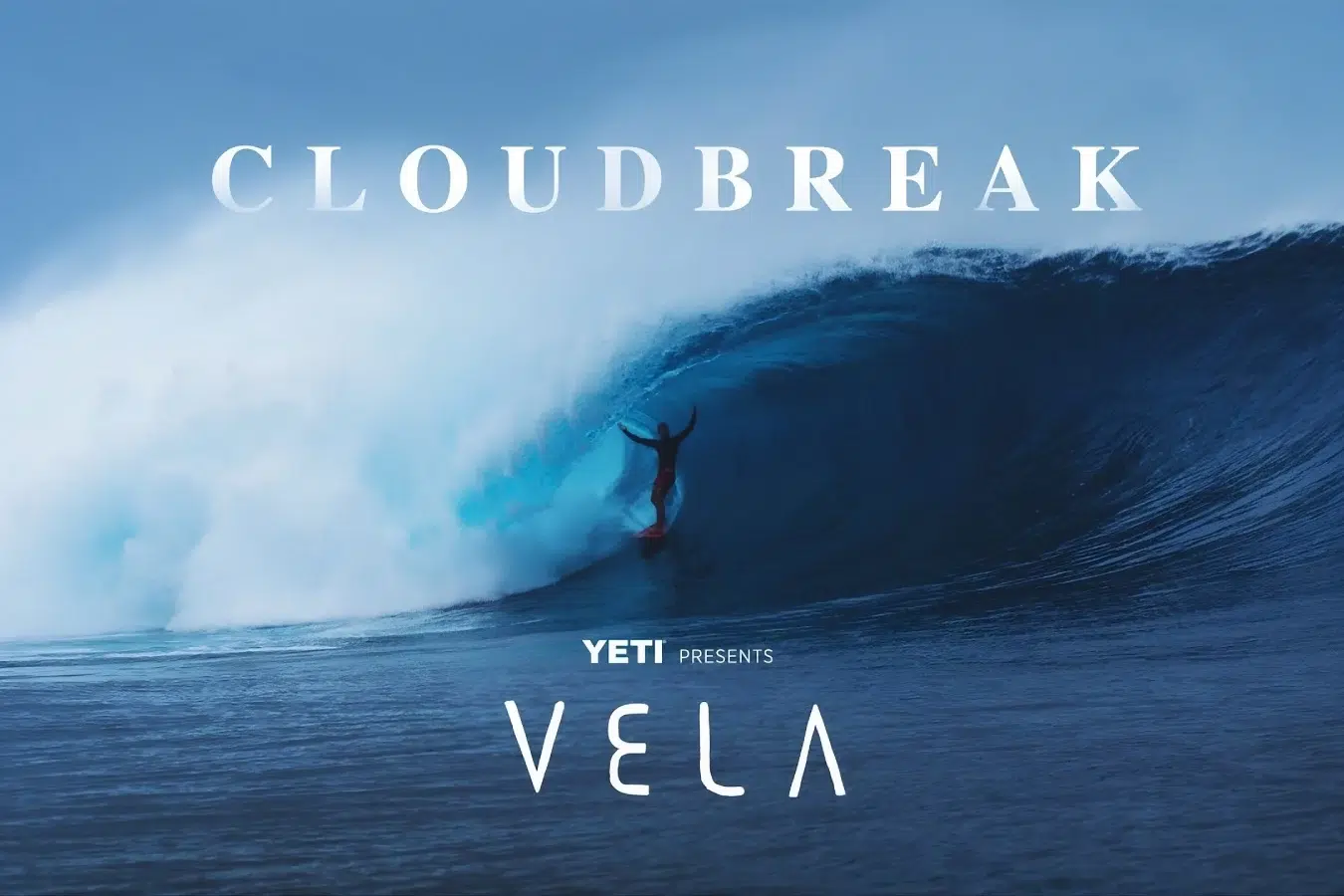

Vela: the Gunboat 48 catamaran of John John Florence
When three-time world surfing champion John John Florence chose a boat to live aboard with his family and cross the Pacific, he chose a Gunboat 48. Her name is Vela. This is the story of that boat: how a 48-foot carbon catamaran became the vessel behind one of surfing's most admired adventures, why John John Florence's catamaran made those voyages possible, and how Vela carried the Florence family from Hawaii to one of the most remote atolls on earth and, later, into a new chapter at sea.
A performance catamaran built for adventure
Vela is built around a simple idea: a fast, light, seaworthy catamaran that a couple or a family can sail offshore without professional crew. It is the boat the founder wanted to sail himself, not a production cruiser dressed up as a performance machine.
- Length overall 48 ft
- Beam 24 ft
- Draft 1 ft 1 in / 7 ft 5 in
- Sail area 1,106 sq ft
- Displacement 20,100 lbs
- Naval architects Morrelli & Melvin
The Morrelli & Melvin design philosophy
The Gunboat 48 was drawn by Gino Morrelli and Pete Melvin, the same design office behind decades of record-setting multihulls. Their brief here was unusual. Rather than a heavy bluewater cruiser or a stripped-out racer, they were asked to build what has been described as a "hot-rod cruiser": a boat that puts the joy of sailing first, then layers comfort and self-sufficiency on top of it without adding the weight that kills performance.
That shows in the details. Lifting daggerboards give a draft of barely a foot with the boards up, opening shallow anchorages most cruisers of this size cannot reach, while the boards down deliver the grip and pointing ability of a far racier machine. The forward cockpit and central pilothouse keep the crew protected and the sail-handling lines close at hand, so a short-handed crew can manage the boat in real conditions. It is light enough to accelerate in a sea breeze and stable enough to cross an ocean, and that balance is exactly what made it the right platform for what came next.
The thinking behind the 48 did not stop with that hull. It became the foundation for the larger Gunboat performance catamarans that followed, carrying the same design DNA into longer, more capable boats.
From Falcor to Vela: the story behind the boat
Before she was Vela, she was Falcor. The boat was owned and heavily upgraded by professional snowboarder and noted sailor Travis Rice, who turned her into a genuinely self-sufficient offshore platform, capable of long passages without resupply. Rice sailed her through the Panama Canal and across the Pacific to French Polynesia, then north through the Line Islands to Hawaii, retracing routes the ancient Polynesians once navigated.
It was in Tahiti that the two paths crossed. Florence met Rice there and sailed Falcor for the first time, and the conversation quickly turned to passing the boat on. Once Rice had completed his delivery to Hawaii, Florence bought her.
Florence renamed the catamaran Vela, after the southern-hemisphere star constellation, a fitting name for a boat meant to be guided by the stars and the ocean. The handover was more than a transaction. It was the boat moving from one waterman to another, each drawn to the same idea: that a fast, capable catamaran is a tool for going to places almost no one else reaches.
John John Florence's first long-range voyage: Hawaii to Palmyra (2019)
In 2019 a knee injury forced Florence out of competition for several months. Rather than wait it out ashore, he used the time at sea, and Vela made the trip he had long dreamed of: a roughly 2,500-nautical-mile round voyage from Hawaii to Palmyra Atoll, in the remote northern Line Islands.
The Vela series, Episodes 1 to 4
The voyage became a four-part documentary series, produced by Florence's own company, Parallel Sea, together with Yeti. The early episodes trace his progression through smaller boats up to ownership of the Gunboat 48, then follow the offshore passage itself. The crew for the trip was John John Florence, his brother Nathan Florence, Kona Johnson, Eric Knutson and professional sailor Jacques Vincent.
Why a Gunboat made this voyage possible
A trip like this asks a lot of a boat. It needs to be fast enough to cover long distances and stay ahead of weather, light enough to be driven by a small crew, and self-sufficient enough to stay out for weeks without resupply. The Gunboat 48 answers all three. Its carbon structure, North Sails wardrobe set on a Marström carbon mast with ECsix carbon rigging, and shallow-draft daggerboard configuration are what let a surfer turned sailor and a small crew reach an atoll most boats never see, and bring everyone home safely.
Vela 2026: a new six-part odyssey
In March 2026 the Vela name returned. Florence stepped away from the 2026 WSL Championship Tour to keep sailing with his family, and released a new six-part series, again named Vela, on his YouTube channel, with all six episodes already available since March 2026.
Stepping away from the Championship Tour for the open ocean
Walking away from the tour as a reigning world champion was a statement. Florence framed the decision not as a break from surfing but as a return to its roots, describing the journey as a modern version of what surfing used to be: sailing to remote coastlines and surfing perfect, empty waves found along the way. The series, filmed over many months aboard their boat with his wife Lauryn and their son, captures exactly that life at sea.
The series is published on John John Florence's official YouTube channel right here.
The Gunboat performance catamaran heritage
If Vela's story resonates, the same DNA lives on in the current range. The Gunboat 48 is no longer in production, but the philosophy that built her, fast, light, carbon-built and genuinely ocean-capable, carries straight through to the boats Gunboat builds today at our shipyard in La Grande Motte.
The Gunboat 68 series is the spiritual successor to the 48, a larger but equally focused performance cruiser, while the Gunboat 72 series extends that same performance cruising catamaran approach to a bigger, more powerful platform. Each one is built to do what Vela did: take a family to the far edges of the map, fast and under sail.