Luxury yacht interior: trends, features, inspiration
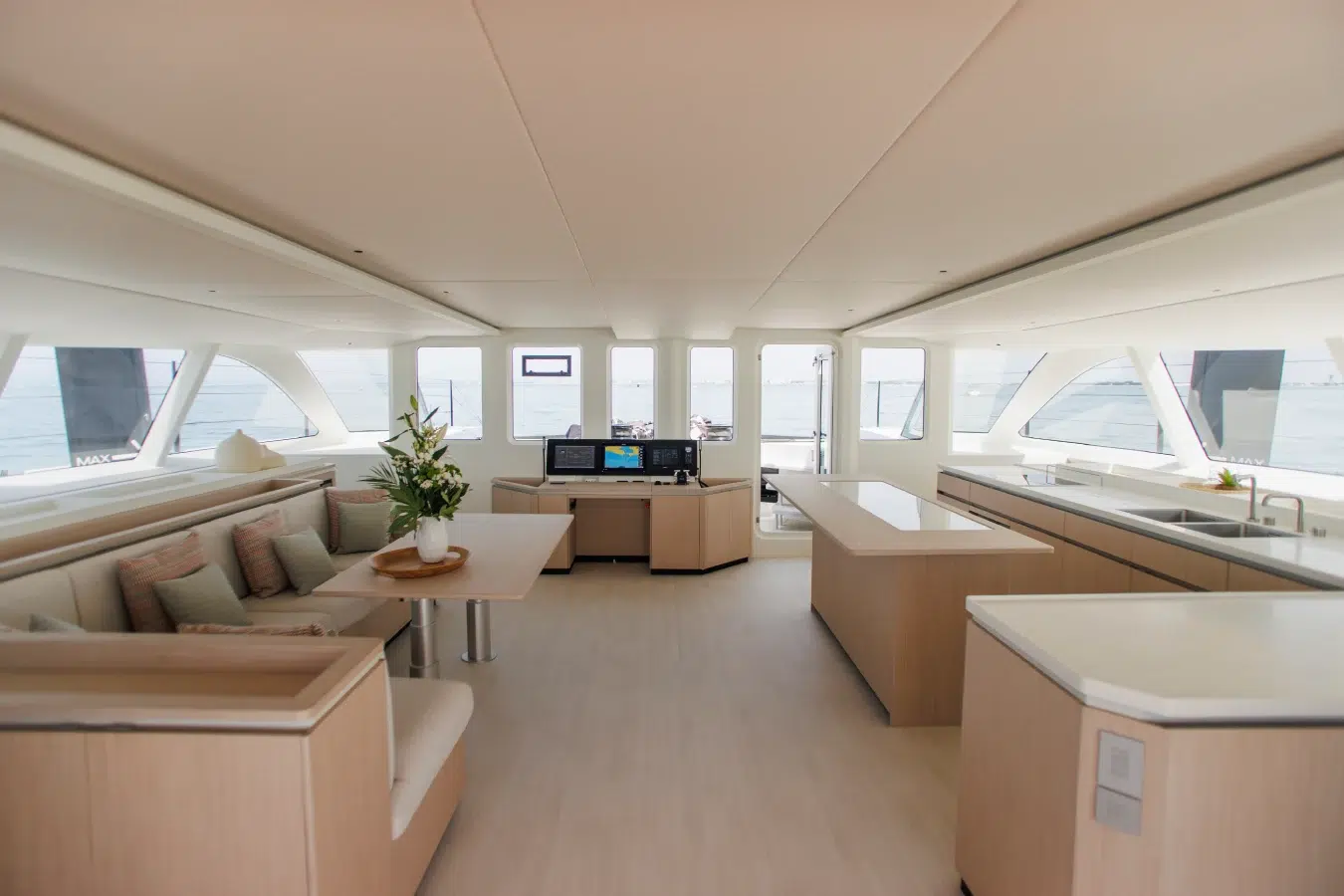
Discover the trends, materials, and innovations defining luxury yacht interiors today. From bespoke craftsmanship to indoor-outdoor living and smart technology.
Inside today's luxury yacht interiors: trends, features and inspiration
What defines a luxury yacht interior in 2026? For decades the phrase conjured the same image: dark cabins, thick carpet, polished marble and gilded detail borrowed from a five-star hotel. Today the definition has shifted. Contemporary luxury at sea is less about ornament and more about light, space, materials chosen with intent, and a design that connects you to the water rather than shutting it out. Across the finest yachts afloat, the same threads recur: bespoke craftsmanship, natural light and open volume, a seamless flow between inside and out, intelligent onboard technology, a growing commitment to sustainability, and above all the ability to tailor every detail to the owner. In this guide we walk through the trends, the materials, the innovations, and the design philosophies that shape today's most coveted yacht interiors.
What makes a yacht interior truly “luxury”?
The clearest shift in high-end yacht design is the move away from ostentation. Gold fittings and heavy stone once signalled wealth; today they read as dated. Contemporary luxury is quieter and more demanding. It lives in the grain of hand-selected timber, the stitching on a leather panel, the way a joint disappears into a surface, the perfect fall of light across a saloon at anchor.
Two ideas define it. The first is bespoke craftsmanship: genuine luxury is custom-made, hand-finished and specific to one boat and one owner, not selected from a catalogue. The second is functionality wrapped in beauty. On a yacht, every element must also work at sea, so the real skill lies in making refined materials and clean lines survive salt, motion and daily life without ever looking utilitarian. When craftsmanship and function meet, the result feels effortless, and that ease is the truest marker of a luxury yacht interior.
Light, space and panoramic views: the contemporary signature
If one feature separates a modern luxury interior from a traditional one, it is light. Where older yachts turned inward, today's interiors open outward through wraparound windows and full-height glazing that pull the horizon inside. The effect is transformative: a saloon flooded with daylight, sightlines that run uninterrupted to the sea, and the feeling of being in nature rather than in a hotel suite.
Volume matters just as much. Open-plan living, where galley, dining and lounge share a single bright space, has become the contemporary ideal. This is territory where catamarans have a natural advantage: two hulls joined by a wide bridge deck create a broad, light-filled central living area that a single-hull yacht struggles to match, along with panoramic views on every side. It is one reason the catamaran interior has become such a strong expression of modern luxury.
The materials that define luxury at sea
Materials carry the identity of a luxury interior. The palette that defines the best yachts today balances natural warmth against high-tech precision.
Wood: warmth and tradition
Timber remains the soul of a fine interior. Teak brings maritime heritage and resilience; walnut adds depth and richness; oak, often in paler, brushed finishes, suits the light, contemporary aesthetic. Increasingly the wood is chosen for how it catches daylight rather than for how dark and formal it looks.
Leather, fabric and natural stone: texture as luxury
Where colour is restrained, texture does the work. Hand-stitched leather, premium textiles and carefully placed natural stone add tactility and contrast. A single stone surface or a run of bespoke upholstery can anchor an entire scheme, and because these materials are felt as much as seen, their quality is immediately obvious underfoot and underhand.
Carbon and high-tech materials: the modern accent
On a performance yacht, carbon fibre is both structure and statement. Its presence, whether a visible weave or a slim structural line, signals engineering and lightness, and it provides the crisp modern counterpoint to natural timber and leather. Used with restraint, carbon and brushed metal give a contemporary interior its edge without ever feeling cold.
Open-plan living and the indoor-outdoor connection
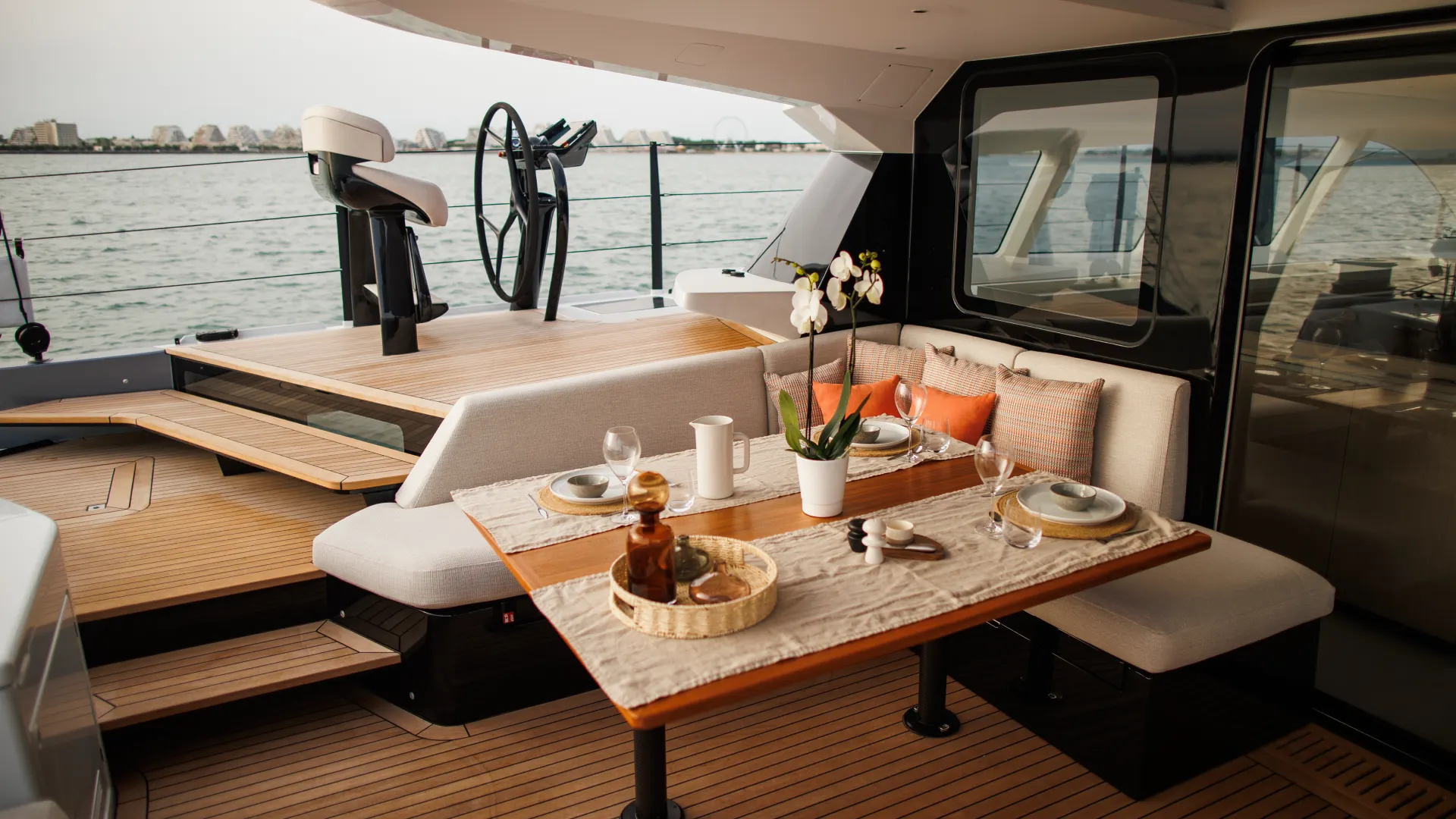
Perhaps the defining luxury of contemporary yachting is the dissolving of the line between inside and out. Large sliding doors let the aft cockpit become an extension of the saloon; the flybridge opens the living space to the sky; forward cockpits and terraces create intimate coves to enjoy the water up close. Indoors and outdoors stop being separate zones and become one continuous living environment.
This is a dimension where catamarans hold a structural edge. Two hulls linked by a bridge deck simply offer more connected, open space than a monohull of the same length, and that space flows naturally out to generous cockpits on the same level. On a yacht such as the Gunboat 80, the result is a single-level social heart that runs from the forward cockpit through the saloon to the aft deck, the water always in view. It is open-plan living, taken to sea.
Smart technology and sustainability: the new standards
Two forces are reshaping what buyers expect from a luxury interior, and increasingly they work together.
The first is smart yacht technology. Integrated lighting, climate control and audio now respond to a single touch-control hub, and much of it can be managed remotely from a smartphone, so the boat is ready before the owner steps aboard. Marine home automation has quietly become an expectation rather than a novelty, and the best installations stay invisible: the technology serves the experience without cluttering the space.
The second is sustainability, now a genuine luxury standard rather than an afterthought. Eco-friendly materials and finishes, responsible sourcing and energy-efficient systems increasingly define a considered interior. This aligns naturally with performance sailing yachts: lightweight construction, extensive solar power and compatibility with electric propulsion mean less reliance on engines and a cleaner way to cruise, so the choices that make a yacht efficient are often the same ones that make it sustainable.
Owner customization: what “bespoke” really means
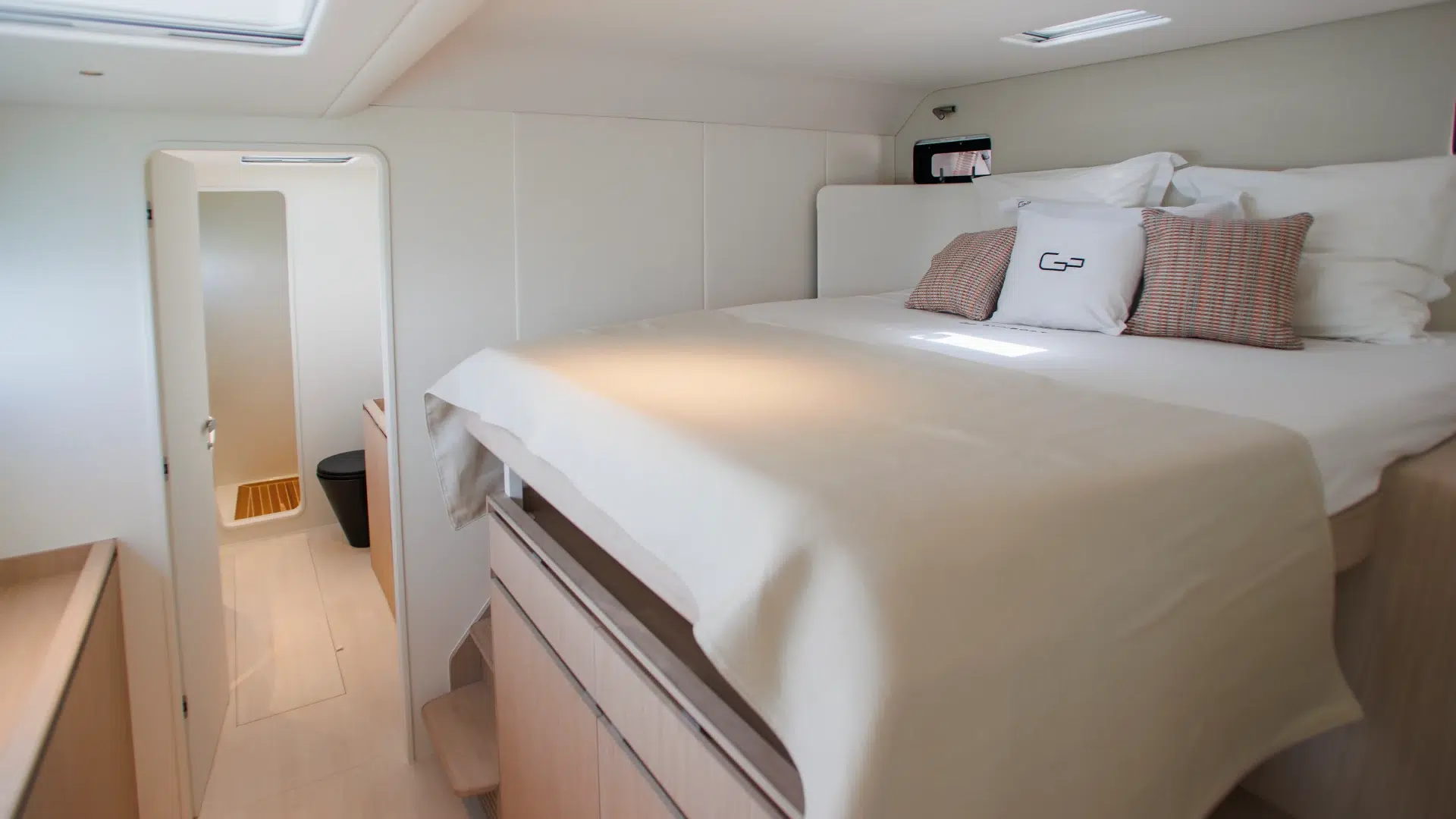
Bespoke is the word the industry uses most and defines least. On a genuinely custom yacht it has a precise meaning: the interior is built around the owner rather than adapted to them. Cabin layout, material palette, finishes and one-off requests are decided project by project, hull by hull.
This is central to how Gunboat works. Each hull is a custom build, so no two interiors are alike: an owner sets the number and arrangement of cabins, chooses the materials, and specifies details down to the fittings, while the shipyard's craftsmanship holds it all to a single standard. Customization also means designing around how a boat will actually be used. Vela, the Gunboat 48 owned by surfer John John Florence, is a case in point: her interior is pared back and purpose-built for off-grid family voyaging, proof that a bespoke fit-out serves the owner's life, not a fixed idea of what luxury should look like.
Monohull vs catamaran luxury interior: two approaches
There is no single right way to do luxury at sea, but there are two clear philosophies, and they suit different owners.
The traditional monohull interior leans into intimacy: cosy, separate cabins, a sense of enclosure and the classic feel of a yacht below decks. It is a reassuring, timeless expression of luxury that many owners love precisely because it feels like a retreat from the elements.
The catamaran interior takes the opposite view. Open volumes, abundant natural light, panoramic views and a fluid indoor-outdoor connection make the sea itself part of the interior. For owners who want space, brightness and a modern, sociable environment, it is the more compelling of the two. It is also the philosophy Gunboat is built on: the contemporary luxury of a high-performance catamaran, most fully realised in the Gunboat 80.